





Phone:
+86-15928560945
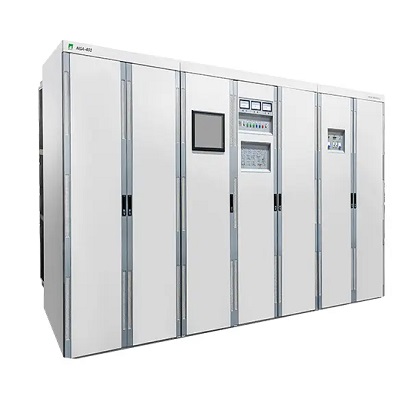
DRM Radio Headend
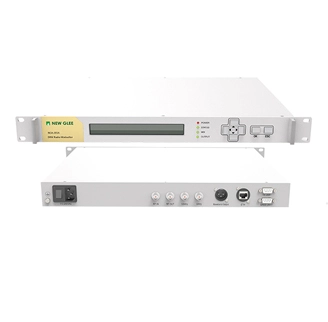
- NGA-201A DRM Radio Modulator
- NGA-101 DRM Media Encoder
- NGA-201F DRM FM Modulator
- NGA-602 DRM Monitor Receiver

Digital Radio Mondiale (DRM) is an international standard for digital broadcasting, designed to deliver high-quality digital audio and data services across shortwave, medium wave, long wave, and VHF bands. Recognized by the International Telecommunication Union (ITU) as a global digital broadcasting standard, the primary DRM standards have been published by ETSI. DRM has become a well-established technology, widely adopted in numerous regions worldwide.
DRM employs COFDM (Coded Orthogonal Frequency Division Multiplexing), allowing digitally encoded audio and data signals to be distributed across many closely spaced carriers within the assigned transmission channel. Time interleaving is used to reduce fading effects. The flexibility of OFDM and coding parameters allows DRM to adapt to various propagation environments, optimizing the balance between transmission power, robustness, and data capacity.

Enhanced Listener Experience: DRM delivers superior sound quality and reception, enabling clearer, high-fidelity audio that enhances the enjoyment of music, radio shows, and spoken content.
Multiple Channel Availability: It allows multiple channels to be broadcast on the same frequency, offering listeners a wider selection of diverse programming.
Broader Coverage: DRM digital broadcasts extend beyond the range of traditional analog broadcasts, serving a larger population.
Improved Energy Efficiency: Digital broadcasting in DRM consumes less power for the same area, leading to energy cost savings and reduced operational expenses.
Efficient Spectrum Utilization: DRM optimizes the use of spectrum resources, supporting more channels and services, crucial for spectrum management.
Global Standardization: As an internationally standardized technology, DRM promotes compatibility and cooperation among broadcasters and regulatory bodies, ensuring seamless service exchange across countries.
Newglee DRM products are suitable for broadcasters, government radio stations, system integrators and distributors that need digital radio equipment for coverage expansion, emergency communication, digital AM/FM upgrade or receiver supply.
Government and Public Radio Stations
Support regional or national DRM radio stations with stable transmission, monitoring and receiver deployment.
Medium Wave and Shortwave Upgrade
Upgrade analog transmission infrastructure to digital radio while reusing suitable parts of the existing station system.
In-Car DRM Reception
Support digital radio reception scenarios for automotive and mobility markets where DRM in radio can provide digital audio and data services.
Receiver Distribution and Testing
Supply DRM receivers for broadcasters, dealers, field testing and end-user reception projects.
Ensure that the device is well cooled, check the power supply stability, and analyze whether there are interference sources around (such as other transmitting devices).
Check whether the transmission power setting meets the design target, and ensure that the antenna is installed at a high place and matches the gain requirements.
Confirm whether the receiver frequency setting is correct, check whether there is DRM signal coverage in the area, or replace the receiving antenna.
Confirm the type of audio interface supported by the receiver (such as 3.5mm, RCA, or Bluetooth), and connect it to the external audio device correctly according to the user manual.
Confirm the receiving antenna direction and sensitivity, ensure that the SNR of the received signal is high enough, and test other audio output devices.
Please send an email to gujx@newglee.com for agent information.
DRM radio is digital radio based on the Digital Radio Mondiale standard. It enables broadcasters to transmit digital audio and data services over existing radio bands, including shortwave, medium wave, long wave and VHF/FM applications.
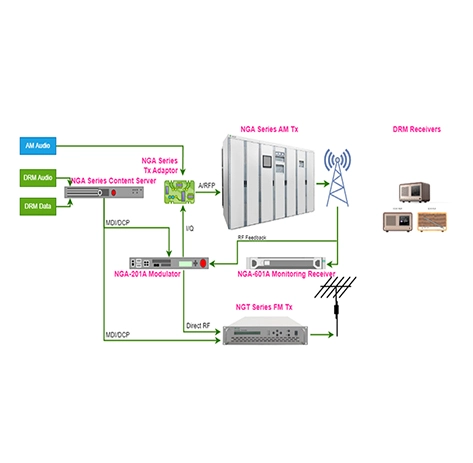
A complete DRM broadcast system may include a media encoder, DRM modulator, DRM transmitter, monitor receiver and DRM radio receivers. The final configuration depends on the frequency band, station infrastructure and coverage target.
DRM is commonly used to describe digital radio broadcasting across existing AM and VHF bands, while DRM+ is often used for higher-frequency VHF/FM applications. Newglee offers DRM modulation and DRM FM modulation products for different project needs.
Please send an email to gujx@newglee.com for agent information. Newglee can provide receiver recommendations, DRM radio receiver price information and support for bulk procurement or project-based supply.
For radio stations and government broadcasting networks, DRM radios are not simply a replacement for traditional receivers. They are part of a complete DRM digital radio ecosystem that helps broadcasters improve audio quality, expand coverage, reduce operating costs and deliver more services through the same spectrum resources.
Compared with traditional analog broadcasting, DRM radio supports clearer sound, more stable reception, multiple audio or data services, and better spectrum efficiency. It can be used across shortwave, medium wave, long wave and VHF/FM bands, making it suitable for national broadcasting, regional coverage, emergency communication and digital radio upgrade projects.

