




Phone:
+86-15928560945
Digital Radio Mondiale (DRM) technology has become an important digital broadcasting standard for broadcasters, public communication networks, and organizations looking to improve radio transmission efficiency. However, maintaining a reliable DRM broadcast requires accurate monitoring of key signal parameters such as MER, SNR, BER, and RF Level.
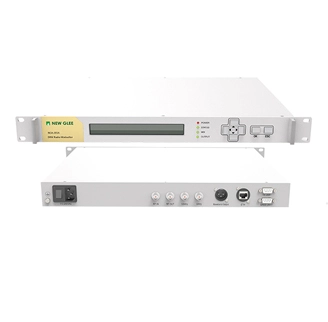
A professional drm monitoring receiver is designed to help engineers evaluate transmission quality, identify signal degradation, and optimize broadcast performance. By analyzing these technical indicators, broadcasters can better understand the actual condition of a drm signal and ensure stable reception for listeners.
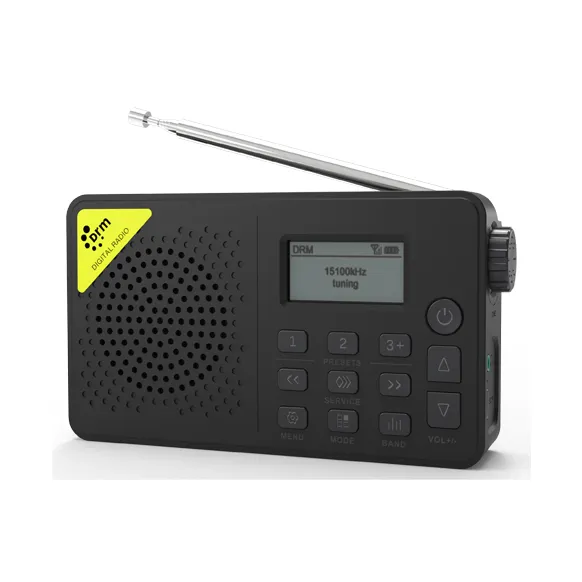
A DRM monitoring receiver is a specialized device used to capture, decode, and analyze Digital Radio Mondiale broadcasts. Unlike a standard consumer radio receiver, a monitoring receiver provides detailed technical measurements that allow engineers to evaluate transmission conditions.
DRM technology supports digital broadcasting on different frequency bands, including AM bands (DRM30) and VHF bands (DRM+). It uses advanced digital modulation techniques to deliver improved audio quality, additional data services, and more efficient spectrum utilization compared with traditional analog broadcasting.
According to the overview of Digital Radio Mondiale, DRM is an open digital radio standard designed to replace analog radio broadcasting while maintaining compatibility with existing frequency allocations.
For broadcasters, monitoring is not only about checking whether audio is available. Engineers need measurable data to understand:
Whether the transmitter output is stable
How much interference affects reception
Whether the received signal has sufficient quality margin
Whether network coverage meets expectations
A professional drm monitoring receiver can collect these measurements continuously and provide valuable information for broadcast maintenance and optimization.
RF Level refers to the strength of the received radio frequency signal. It is usually measured in dBm and represents how much signal power reaches the receiver antenna.
In DRM broadcasting, RF Level is one of the first parameters engineers check because a weak incoming signal can directly affect decoding performance.
A higher RF Level generally indicates:
Stronger signal availability
Better resistance against noise and interference
More stable DRM decoding
However, RF Level alone does not guarantee good reception. A strong signal can still experience poor quality if it is affected by interference, multipath propagation, or excessive noise.
For example:
| Signal Condition | RF Level | Possible Result |
|---|---|---|
| Strong and clean signal | High | Stable DRM decoding |
| Strong but noisy signal | High | Possible decoding errors |
| Weak but clean signal | Low | Limited reception margin |
| Weak and noisy signal | Low | Frequent service interruptions |
Therefore, engineers usually analyze RF Level together with other parameters such as SNR, MER, and BER.
For organizations deploying monitoring systems, a reliable drm monitor provides a complete view of RF conditions rather than relying only on signal strength.
When evaluating a digital radio transmission, three important measurements are commonly analyzed: MER, SNR, and BER.
Although they are related, they describe different aspects of signal performance.
SNR, or Signal-to-Noise Ratio, measures the difference between the desired signal power and background noise.
A higher SNR usually means:
Cleaner reception
Better decoding capability
Lower probability of audio interruptions
In DRM systems, insufficient SNR can prevent successful decoding even when the RF Level appears acceptable.
MER measures how accurately the received symbols match their ideal modulation positions.
It is especially important in digital communication systems because it reflects the overall quality of the modulation process.
A higher MER indicates:
Lower distortion
Better transmitter performance
More accurate digital symbol detection
Compared with SNR, MER provides a more detailed view of modulation quality because it considers errors introduced during transmission.
BER represents the number of incorrectly received bits compared with the total transmitted bits.
For digital radio networks, BER is directly related to decoding reliability.
A lower BER means:
Fewer transmission errors
Better data integrity
More reliable audio and data services
Many DRM receivers use error correction technologies, meaning a certain level of BER can be tolerated before users notice service degradation.
The following table summarizes the differences between these important measurements:
| Parameter | Full Name | What It Measures | Importance for DRM Monitoring |
|---|---|---|---|
| RF Level | Radio Frequency Level | Received signal power | Shows signal availability |
| SNR | Signal-to-Noise Ratio | Signal strength compared with noise | Indicates reception clarity |
| MER | Modulation Error Ratio | Accuracy of digital modulation | Evaluates transmission quality |
| BER | Bit Error Rate | Data transmission errors | Indicates decoding reliability |
A complete radio drm receiver used for professional monitoring typically evaluates all these parameters together because each measurement provides different information about the transmission chain.
A DRM monitoring receiver plays an important role throughout the broadcast workflow, from transmitter testing to long-term network maintenance.
Common applications include:
After installation or maintenance, engineers can use monitoring equipment to confirm that the transmitted DRM signal meets expected quality levels.
Measurements such as MER help identify issues related to:
Modulation accuracy
Equipment stability
Signal distortion
Broadcast organizations often perform field measurements to understand real-world reception conditions.
By collecting RF Level, SNR, and BER data in different locations, engineers can evaluate:
Coverage range
Reception reliability
Potential interference areas
When listeners experience poor reception, technical teams need objective data to identify the cause.
A monitoring receiver can help determine whether problems originate from:
Insufficient signal strength
External interference
Transmission errors
Environmental factors
According to information published by the International Telecommunication Union (ITU), radio communication systems require careful management of spectrum, signal quality, and interference to maintain reliable services.
For professional broadcast environments, solutions provided by companies such as Newglee focus on supporting digital radio monitoring and receiver applications for global markets.
A DRM monitoring receiver is used to receive, decode, and analyze DRM broadcasts. It provides technical measurements such as RF Level, SNR, MER, and BER to help engineers evaluate transmission quality.
SNR measures the relationship between the received signal and background noise, while MER evaluates the accuracy of digital modulation. MER can provide deeper insight into transmission quality because it reflects symbol-level errors.
BER shows how many bits are incorrectly received during transmission. A lower BER generally indicates better decoding reliability and more stable digital radio services.
No. A strong RF Level only indicates signal power. Interference, noise, and distortion can still reduce DRM reception quality, which is why additional measurements like SNR and MER are required.
Professional monitoring normally includes RF Level, SNR, MER, BER, decoding status, and other transmission-related information to provide a complete assessment.
No. DRM monitoring solutions can also be used by research organizations, educational broadcasters, emergency communication networks, and regional radio operators that need reliable digital transmission analysis.
Wikipedia – Digital Radio Mondiale
https://en.wikipedia.org/wiki/Digital_Radio_Mondiale
International Telecommunication Union (ITU) – Radio Communication Sector
https://www.itu.int/rec/R-REC/en


