


Phone:
+86-15928560945
For broadcast network operators planning a transition from analog to digital radio, the decision extends beyond selecting a single transmitter. A complete DRM (Digital Radio Mondiale) deployment involves content encoding, signal modulation, transmission, reception devices for end users, and a monitoring system that ensures broadcast quality across the network. Each component must work together as an integrated system — a weakness in any link affects the entire broadcast chain.
While individual DRM transmitters have been discussed as standalone procurement items, this article takes a system-level perspective. It examines the complete DRM broadcast end-to-end solution: what each subsystem does, how the components interact, and what broadcast operators should consider when evaluating a full-system supplier rather than purchasing individual components from multiple vendors.
Newglee, a broadcasting equipment manufacturer with R&D centers in Shenzhen, Dongguan, and Chengdu, offers a DRM broadcast end-to-end solution that spans content production, transmission, reception, and monitoring. This guide covers the system architecture, key components, and procurement considerations.
A DRM broadcast end-to-end solution is a complete digital radio broadcasting system that covers the full signal chain from audio content creation through to listener reception and network monitoring. Rather than procuring a transmitter, a modulator, and receivers separately from different suppliers, an end-to-end solution provides all components as an integrated, tested system from a single source.
The DRM standard supports digital broadcasting across multiple frequency bands — medium wave (MW), shortwave (SW), and FM bands — using advanced audio coding and digital modulation to deliver superior audio quality, text and data services, and more efficient spectrum utilization compared to analog broadcasting. An end-to-end solution ensures that all components in the chain are compatible, properly configured, and supported by a single technical team.
Newglee's DRM broadcast end-to-end solution comprises four interconnected subsystems: content production, signal transmission, reception, and monitoring. Each subsystem contains specific hardware and software components that work together to deliver a complete digital broadcasting service.
The content production subsystem handles audio capture, editing, encoding, and multiplexing. Professional audio equipment — including condenser microphones and stereo recording devices — captures high-quality audio. Digital Audio Workstations (DAWs) handle editing, mixing, and post-production.
The NGA-101 DRM content server encodes and multiplexes audio and multimedia data using MPEG xHE-AAC encoding. This codec is specified by the DRM standard for its ability to deliver high-quality audio at low bitrates, which is important for efficient spectrum utilization — more channels and services can fit within the same bandwidth compared to analog broadcasting. The content server also handles the multiplexing of text information, images, and data services alongside the audio stream.
The transmission subsystem converts the encoded digital signal into a radio frequency signal suitable for over-the-air broadcast. Two key components form this chain.
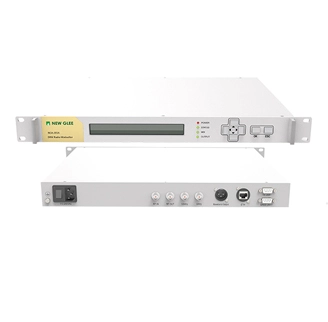
The NGA-201A DRM modulator processes the encoded signal using OFDM (Orthogonal Frequency Division Multiplexing) modulation — the transmission method specified by the DRM standard for robust digital broadcasting. The modulator also employs Digital Pre-Distortion (DPD) technology, which optimizes the signal quality by pre-compensating for nonlinearities in the power amplifier, improving transmission efficiency and reducing out-of-band emissions.
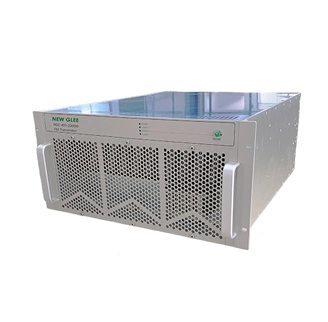
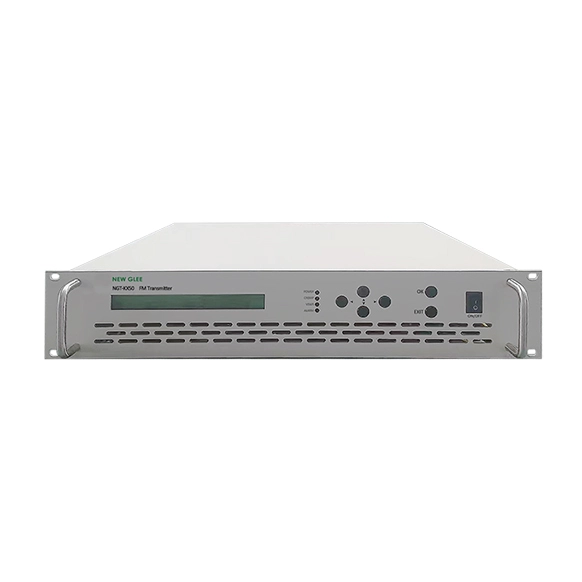
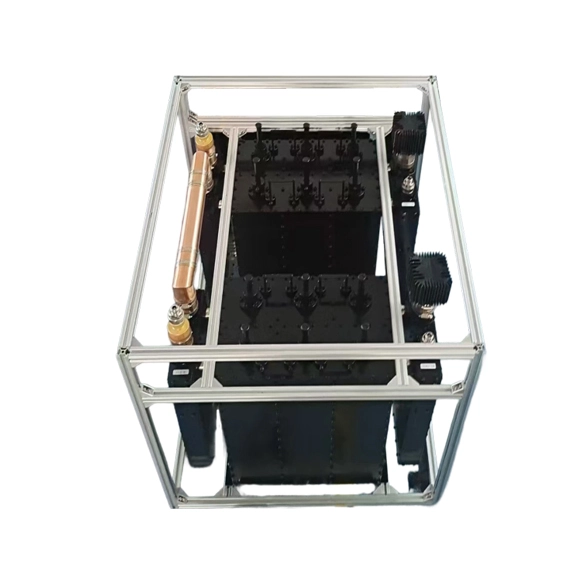
The NGA-201F medium-wave transmitter features Direct Digital Synthesis (DDS) technology, which generates the transmission signal directly in the digital domain rather than through analog frequency conversion. This approach ensures high-efficiency and stable signal output, with the frequency precision that digital broadcasting requires.
The reception subsystem provides the end-user devices that receive and decode the DRM signal. Newglee offers three receiver categories designed for different listening contexts.
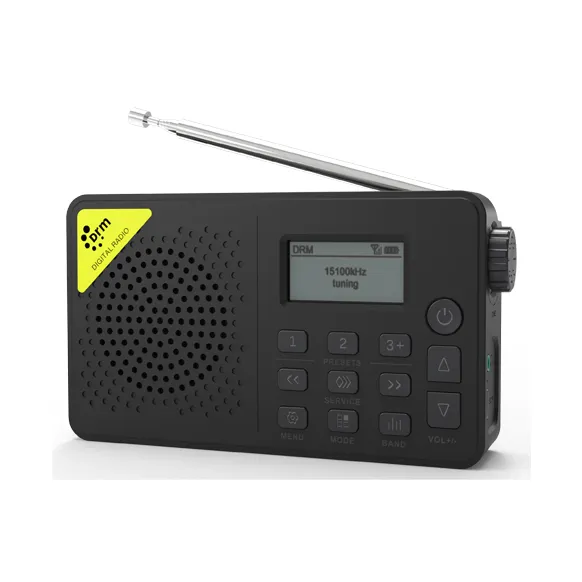
The NGA-801 DRM receiver is designed for home and personal use. It supports multi-band reception (MW, SW, FM), Bluetooth playback for streaming audio from mobile devices, and emergency alert reception — a feature that makes DRM relevant for public safety and civil protection applications.
The NGA-701 car receiver delivers stable DRM reception for in-vehicle listening. It supports Bluetooth, USB, and SD card interfaces, providing multiple audio source options alongside DRM broadcast reception. As DRM receiver penetration in vehicles increases, the availability of car receivers is a key factor in the standard's adoption.
The NGA-711 outdoor speaker is powered by solar and DC sources, making it suitable for public broadcasting in areas without reliable grid power. It ensures emergency alert delivery and wide-area coverage, which is relevant for rural broadcasting, disaster warning systems, and public information dissemination in remote areas.
The monitoring subsystem provides the tools that broadcast operators need to maintain signal quality and manage the network. The NGA-601 DRM monitor continuously assesses signal quality at the transmission site, providing real-time measurement of transmission parameters and alerting operators to deviations from specification.
The NGA-610 monitoring platform manages multiple receivers across the broadcast network, providing centralized visibility into coverage quality. It delivers real-time data, historical reports, and automated alerts — enabling network operators to identify coverage gaps, track performance trends, and respond to issues before they affect the listener experience.
The primary advantage of an end-to-end solution is integration. When all components come from a single supplier, compatibility is guaranteed, configuration is pre-tested, and technical support covers the entire system. For broadcast operators, this means faster deployment, fewer integration issues, and a single point of contact for maintenance and troubleshooting.
The system is designed with scalability in mind. Broadcast operators can start with a single transmitter site and expand to a multi-site network as coverage requirements grow. The modular design of individual components — particularly the transmitter and modulator — supports incremental capacity expansion and technology upgrades without replacing the entire system.
National broadcasters operating analog AM or FM networks can use the DRM end-to-end solution to migrate to digital broadcasting. The system supports simulcast operation — broadcasting the same content in analog and digital simultaneously — which allows a gradual transition as receiver penetration increases in the market.
Regional broadcasters can deploy the DRM system to serve specific geographic areas with digital-quality audio and data services. The scalability of the system makes it practical for regional networks that may start with a single transmitter and expand as audience adoption grows.
The DRM standard's ability to carry text and data alongside audio makes it suitable for emergency broadcasting. The NGA-711 solar-powered outdoor speaker ensures that emergency alerts reach areas without grid power, while the NGA-801 receiver's emergency alert feature provides in-home alert capability. For government agencies responsible for disaster warning and public safety communications, the end-to-end system provides a complete alerting infrastructure.
DRM's coverage characteristics — particularly in the medium-wave and shortwave bands — make it effective for reaching rural and remote areas where FM coverage is limited. The solar-powered outdoor speaker addresses the lack of grid power in these areas, providing a reception solution that does not depend on electrical infrastructure.
The first step in planning a DRM deployment is defining the coverage area and selecting the appropriate frequency band. Medium-wave DRM provides wide-area coverage from a single transmitter site. Shortwave DRM enables cross-border and long-distance broadcasting. FM-band DRM (DRM+) provides higher audio quality for local coverage. The system must be configured with the appropriate transmitter, antenna, and modulator for the chosen band.
The success of a DRM deployment depends on receiver availability in the market. Broadcast operators should plan for receiver distribution — whether through commercial retail channels, government-sponsored distribution programs, or bundling with broadcasting service subscriptions. The availability of multiple receiver types (home, car, outdoor) from the same supplier supports a comprehensive receiver strategy.
Broadcast operators with existing analog infrastructure should assess what can be reused. In some cases, the existing antenna system, transmission line, and tower structure can be used with the new DRM transmitter, reducing the total project cost. The ability to operate in simulcast mode allows phased migration without a hard cutover date.
For multi-site networks, the monitoring system is critical. The NGA-610 platform's ability to manage multiple receivers and provide centralized reporting supports network operations at scale. Broadcast operators should define their monitoring requirements — including which parameters to track, alert thresholds, and reporting frequency — during the system design phase.
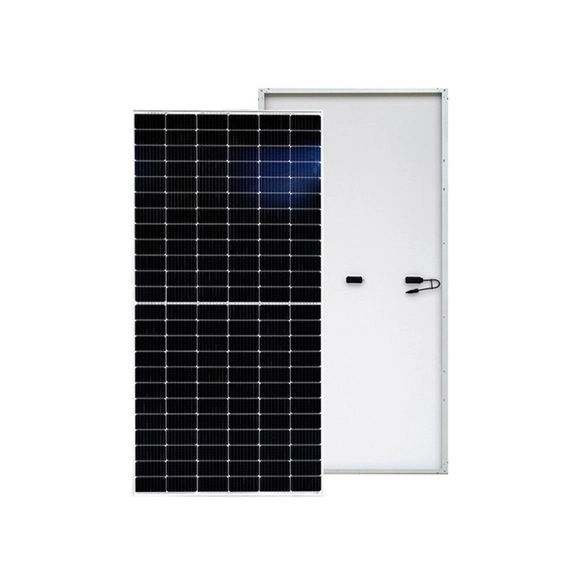
For transmission sites in areas with unreliable grid power, the power supply arrangement affects system reliability. The solar-powered NGA-711 outdoor speaker addresses reception-side power challenges, but transmission sites also need reliable power. Broadcast operators should assess site power infrastructure as part of the deployment planning.
An end-to-end system requires end-to-end support. Broadcast operators should confirm that the supplier provides: system design and coverage planning consultation, on-site installation and commissioning, training for station engineers, spare parts inventory, remote diagnostic support, and ongoing maintenance services. Newglee operates R&D centers in Shenzhen, Dongguan, and Chengdu, with engineering teams that provide technical support and service across the system.
Newglee was founded in 2017 and focuses on DRM products, FM broadcasting equipment, and solar energy systems. The company operates R&D centers in Shenzhen, Dongguan, and Chengdu, with a team of over 200 professionals — most engineers have more than 15 years of industry experience. Three production bases cover a total facility area of 20,000 square meters.
The DRM broadcast end-to-end solution is the company's most comprehensive offering, covering content production (NGA-101 content server), signal transmission (NGA-201A modulator and NGA-201F transmitter), reception (NGA-801 home receiver, NGA-701 car receiver, NGA-711 outdoor speaker), and monitoring (NGA-601 monitor and NGA-610 platform). This breadth means broadcast operators can source the entire DRM system from a single supplier rather than integrating components from multiple vendors.
The company also offers individual DRM components — including DRM transmitters (NGA-401 series up to 200 kW), DRM modulators, DRM radio headend equipment, and DRM terminals — for operators who need specific components rather than a full system. The broader product range includes FM transmitters (30 W to 50 kW), FM combiners, FM antennas, and FM accessories.
For broadcast organizations planning a DRM deployment, Newglee provides technical consultation on system configuration, coverage planning, frequency selection, and integration with existing infrastructure. The company's experience across both DRM and FM broadcasting equipment means it can support hybrid networks that operate both standards.
Broadcast operators can contact Newglee with their coverage objectives, existing infrastructure details, and receiver strategy to receive a system design proposal and component recommendations.
A DRM broadcast end-to-end solution provides broadcast network operators with a complete, integrated digital radio system — from content production through transmission, reception, and monitoring. The system-level approach ensures component compatibility, simplifies deployment, and provides a single point of accountability for technical support. For operators planning a digital migration, the key factors are coverage planning, receiver strategy, infrastructure reuse, monitoring requirements, and supplier support capability. Contact Newglee with your broadcast network requirements to discuss DRM end-to-end system design and deployment options.


