


Phone:
+86-15928560945
Digital radio technology has transformed the way broadcasters, governments, and communication organizations deliver audio services over traditional frequency bands. Among these technologies, Digital Radio Mondiale (DRM) has become an internationally recognized digital broadcasting standard designed to improve the efficiency, coverage, and audio quality of AM, FM, and shortwave radio transmission.
A DRM receiver is a device designed to decode DRM digital signals and convert them into high-quality audio and data services. Unlike conventional analog radios, DRM systems can provide features such as improved sound quality, program information, emergency warning messages, and additional multimedia data depending on the broadcasting configuration.
Choosing the right receiver depends largely on the intended application. A field engineer monitoring transmission signals has very different requirements from a listener using a portable receiver, while a broadcasting organization may need a professional-grade system capable of continuous operation and detailed signal analysis.
For buyers evaluating DRM equipment, understanding the differences between portable, professional, and monitoring models is essential. As a supplier specializing in digital radio solutions, Newglee provides DRM receiving equipment designed for various broadcast and communication applications.
Portable DRM receivers are primarily developed for users who need flexibility, mobility, and convenient signal reception in different locations. These devices are commonly used by radio enthusiasts, field technicians, journalists, emergency communication teams, and organizations requiring temporary monitoring capabilities. Since DRM technology supports digital broadcasting across different frequency ranges, including AM and shortwave applications, understanding the characteristics of the Digital Radio Mondiale standard helps users evaluate whether a portable receiver meets their reception requirements.
The main advantage of a portable digital radio mondiale receiver is its compact design. Compared with rack-mounted professional systems, portable models typically focus on ease of operation, battery efficiency, and quick deployment. Users can carry the receiver to different locations to evaluate DRM broadcast coverage, test reception quality, or listen to digital broadcasts without requiring complex installation.
Key features commonly found in portable DRM receivers include:
Compact and lightweight construction
Built-in display for frequency and signal information
Support for AM, FM, and shortwave DRM reception
Battery or portable power options
Basic signal quality indicators
Simple user interface for everyday operation
Portable receivers are especially valuable during field surveys. Engineers can use them to identify reception conditions in different geographical areas, while broadcasters can evaluate whether transmitted signals are reaching the target audience effectively.
However, portable models usually have limitations compared with professional equipment. They may not provide advanced measurement functions, continuous 24/7 operation capabilities, or detailed signal analysis tools required by broadcast stations.
For applications where portability and reliable DRM decoding are the primary requirements, products such as the NGA-606 DRM receiver represent the type of compact receiving solution used for mobile DRM reception and evaluation.
When selecting a portable receiver, buyers should consider:
Supported frequency bands
Antenna compatibility
Battery life requirements
Reception environment
Required level of signal information display
A portable DRM receiver is the right choice when mobility and convenience are more important than advanced monitoring functions.
Professional DRM receivers are designed for organizations that require higher reliability, stability, and operational performance. These systems are commonly used by broadcasters, government agencies, research institutions, and communication service providers.
Unlike consumer-oriented portable models, professional receivers are usually engineered for long-term operation in controlled environments. They often provide improved sensitivity, stronger interference resistance, advanced connectivity options, and integration capabilities with existing broadcast systems.
Typical applications include:
Broadcast station monitoring
Transmission verification
Digital radio network testing
Research and development environments
Public communication systems
A professional radio drm receiver generally focuses on accurate decoding performance and operational reliability. For broadcasters, receiving the transmitted signal correctly is only one part of the requirement. Engineers also need to evaluate signal stability, audio quality, transmission parameters, and service information.
Professional DRM receivers may include features such as:
Higher-performance RF front-end design
Multiple output interfaces
Remote control capability
Advanced signal information display
Continuous operating capability
Integration with monitoring platforms
For example, broadcast operators may use professional receivers to confirm whether DRM transmissions are operating according to technical specifications. These systems help identify issues related to signal coverage, interference, or transmission configuration.
According to ETSI DRM technical specifications, DRM systems rely on standardized transmission parameters to ensure compatibility between transmitters and receivers. Professional receiving equipment plays an important role in verifying that broadcast signals are correctly transmitted and decoded according to these standards.
When purchasing a professional DRM receiver, organizations should evaluate:
Reliability and operating stability
Professional environments often require equipment to operate continuously for long periods.
Signal analysis capability
Engineers may need detailed information beyond basic audio playback.
System integration
Compatibility with existing broadcast monitoring infrastructure can reduce deployment complexity.
Future scalability
Equipment should support evolving digital broadcasting requirements.
Professional DRM receivers are therefore the preferred solution for users who prioritize accuracy, stability, and integration over portability.
A DRM monitoring receiver serves a more specialized role than a standard listening device. Instead of focusing mainly on audio reception, monitoring equipment is designed to help engineers analyze, evaluate, and maintain broadcast signal performance.
Broadcast organizations often operate multiple transmission sites and need reliable tools to verify service quality. A dedicated drm monitor allows technical teams to observe reception status, identify signal problems, and collect operational data.
Common monitoring applications include:
Broadcast quality assurance
Remote transmitter monitoring
Signal coverage evaluation
Frequency management
Network performance analysis
A DRM monitoring receiver typically provides more detailed technical information than portable or standard professional receivers. Depending on the equipment design, this may include:
Signal strength measurements
Bit error information
Modulation parameters
Service information analysis
Audio decoding status
Recording or logging functions
For broadcasters, monitoring capability is especially important because digital broadcasting quality depends on multiple technical factors, including signal propagation conditions, interference levels, and transmission configuration.
A dedicated monitoring system helps operators detect problems before they affect listeners. For example, if a transmitter experiences reduced coverage or unstable signal conditions, engineers can use monitoring data to investigate and correct the issue.
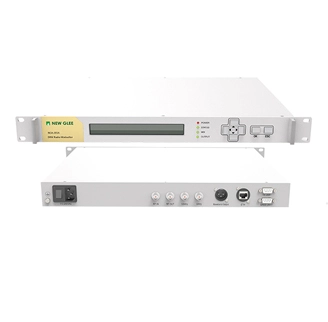
The NGA-602 DRM monitor is designed for applications where continuous DRM signal observation and technical evaluation are required.
Compared with portable receivers, DRM monitoring systems usually require:
Higher measurement accuracy
Continuous operation capability
Better data recording functions
Professional interfaces for integration
Therefore, a DRM monitor is the ideal choice for organizations that need not only reception but also technical visibility into their broadcasting network.
Selecting the correct DRM receiver requires evaluating both technical requirements and operational goals. There is no single model that fits every application because different users have different priorities. As digital broadcasting continues to replace traditional analog transmission methods in many markets, the development of digital radio technology has introduced new possibilities for improved audio quality, spectrum efficiency, and additional data
The following factors can help buyers make a more informed decision.
The first step is identifying how the receiver will be used.
For personal listening or field testing: choose a portable DRM receiver.
For broadcast operations: consider a professional DRM receiver.
For technical analysis and quality control: select a DRM monitoring receiver.
Understanding the purpose prevents unnecessary investment in features that may not be required.
DRM technology can operate across different frequency ranges, including:
AM bands
Shortwave frequencies
FM/VHF broadcasting bands
Buyers should confirm that the receiver supports the required frequency range for their application.
If the goal is simply receiving audio, basic DRM decoding may be sufficient.
However, broadcasters and engineers often require additional information, including:
Signal quality measurements
Error monitoring
Transmission parameters
System status information
In these cases, professional or monitoring models provide significant advantages.
Professional users should consider how the receiver will work within existing systems.
Important considerations include:
Remote access capability
Communication interfaces
Software compatibility
Installation environment
A receiver used in a broadcast center has different requirements from one used during outdoor field testing.
DRM equipment selection is not only about hardware specifications. Technical support, product documentation, customization capability, and long-term supply stability are also important factors.
Companies specializing in digital broadcasting solutions can help customers choose suitable equipment based on operational requirements.
Portable, professional, and monitoring DRM receivers serve different purposes within the digital broadcasting ecosystem.
Portable receivers provide flexibility and convenience for mobile reception and field testing. Professional DRM receivers deliver higher reliability and integration capability for broadcasters and organizations. DRM monitoring receivers provide advanced analysis functions required for maintaining transmission quality and operational control.
Before purchasing DRM equipment, users should carefully evaluate their application scenario, required performance level, and future expansion needs.
Whether the goal is receiving digital broadcasts, testing coverage, or managing a professional broadcast network, selecting the appropriate DRM receiver ensures better performance, higher reliability, and more efficient operation.
With the continued development of digital broadcasting worldwide, reliable DRM receiving technology will remain an important component for organizations seeking efficient and high-quality radio communication solutions.


