





Phone:
+86-15928560945
Digital Radio Mondiale (DRM) has become an important digital broadcasting technology for organizations seeking efficient spectrum utilization, improved audio quality, and reliable data transmission. However, launching a DRM service successfully requires more than installing a transmitter. Broadcasters must understand how the signal performs in real-world environments through professional coverage measurement and field testing.
A well-designed DRM field test helps engineers evaluate transmission range, identify reception limitations, analyze interference sources, and optimize network performance. By using a professional DRM receiver, engineers can collect accurate measurement data and understand how a DRM signal behaves under different geographical and environmental conditions.
This guide explains how to plan a DRM coverage measurement project, what parameters should be evaluated, which equipment is required, and how field test results can support better broadcasting decisions.
A DRM coverage measurement is a systematic process used to evaluate how effectively a digital radio signal reaches the intended service area. Unlike analog broadcasting, where signal quality gradually decreases with distance, digital radio systems have specific reception thresholds. Once signal conditions fall below these limits, audio and data services may experience interruptions.
A field test provides practical information that cannot always be predicted through theoretical calculations. Real-world factors such as terrain, buildings, atmospheric conditions, antenna configuration, and interference can significantly influence DRM reception.
According to information from Digital Radio Mondiale, DRM is an open digital broadcasting standard designed for use across different frequency bands, including AM and VHF applications.
A professional measurement campaign allows broadcasters to answer important questions:
How far can the DRM transmission reliably reach?
Are there weak coverage areas?
Does the received signal maintain sufficient quality margin?
Are there interference problems affecting reception?
Is the transmitter configuration optimized?
For these reasons, a reliable DRM monitor solution is commonly used during planning, deployment, and maintenance phases of DRM networks.
Successful DRM coverage testing requires careful preparation. Conducting measurements without a clear plan can lead to incomplete data and inaccurate conclusions.
1. Define the Measurement Objectives
Before starting a field test, engineers should determine what information they need to collect.
Typical objectives include:
Verifying planned coverage areas
Comparing different transmitter configurations
Testing reception quality in urban and rural environments
Evaluating network expansion possibilities
Investigating reported reception issues
Different objectives may require different measurement routes, equipment settings, and analysis methods.
2. Select Test Locations and Routes
The selection of measurement points is one of the most important parts of a DRM field test.
A complete test route may include:
Areas close to the transmitter
Coverage boundaries
Urban environments with buildings
Rural open areas
Locations with possible interference
Engineers usually combine predicted coverage maps with practical geographic conditions to design efficient measurement routes.
3. Prepare Appropriate Measurement Equipment
A field test requires equipment capable of capturing detailed technical information.
Common measurement equipment includes:
Professional DRM receivers
GPS positioning devices
Data logging systems
Antennas suitable for target frequency bands
Signal analysis software
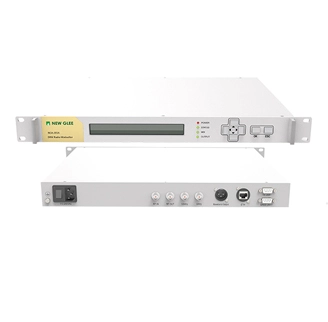
A standard consumer receiver may confirm whether a broadcast can be heard, but it usually cannot provide detailed engineering data. A professional DRM receiver is designed to measure important parameters such as RF level, SNR, BER, and decoding status.
During a DRM field test, engineers analyze multiple parameters to understand overall signal performance.
RF Level
RF Level represents the received radio frequency power. It helps determine whether sufficient signal strength is available at a specific location.
However, high RF Level does not always guarantee good reception because interference and noise may still affect the signal.
Signal-to-Noise Ratio (SNR)
SNR compares the useful DRM signal with background noise.
A higher SNR generally indicates:
Cleaner reception conditions
Better decoding reliability
Improved audio stability
Bit Error Rate (BER)
BER measures the percentage of incorrectly received data bits.
Lower BER values generally indicate better transmission quality. Monitoring BER helps engineers understand whether the digital transmission remains within acceptable decoding limits.
Service Availability
Besides individual signal parameters, engineers often record whether the DRM service can be successfully decoded.
This includes:
Audio availability
Data service reception
Signal lock status
Reception interruptions
The combination of these measurements provides a complete evaluation of the actual DRM signal performance.
Different measurement tools provide different levels of technical information. Selecting suitable equipment depends on project requirements.
| Equipment Type | Main Function | Advantages | Limitations |
|---|---|---|---|
| Consumer DRM Receiver | Basic listening test | Low cost and easy operation | Limited technical data |
| Professional DRM Receiver | Signal measurement and decoding analysis | Provides detailed RF, SNR, BER data | Higher investment |
| Spectrum Analyzer | RF spectrum analysis | Detailed frequency inspection | Requires technical expertise |
| Automated Monitoring System | Continuous signal monitoring | Suitable for long-term operation | More complex deployment |
For engineering projects, a professional receiver is usually preferred because it combines signal reception, decoding capability, and measurement functions in one system.
Organizations that require continuous evaluation may also integrate a radio DRM receiver into permanent monitoring platforms.
Collecting measurement data is only the first step. The real value comes from analyzing results and making technical improvements.
Creating Coverage Maps
Field test data can be combined with geographic information systems (GIS) to create coverage maps.
These maps help engineers identify:
Strong reception zones
Weak signal areas
Coverage gaps
Potential interference locations
Identifying Coverage Problems
Different measurement patterns can indicate different technical issues.
For example:
Measurement Result
Possible Cause
Recommended Investigation
Low RF Level | Distance or antenna limitation | Check transmitter power and antenna system |
Good RF Level but poor SNR | Noise or interference | Analyze surrounding RF environment |
High BER | Transmission quality issue | Check modulation and signal conditions |
Intermittent decoding | Unstable reception conditions | Review terrain and multipath effects |
Optimizing Network Performance
Based on field test results, broadcasters may adjust:
Transmitter parameters
Antenna direction
Broadcast scheduling
Frequency planning
Network design
According to the International Telecommunication Union (ITU), effective spectrum management and interference control are essential for maintaining reliable radio communication services.
Companies such as Newglee provide digital radio measurement and receiver solutions that support professional users in evaluating and monitoring broadcast performance.
A DRM coverage measurement evaluates how well a digital radio signal reaches the intended service area. It helps broadcasters understand actual reception conditions and optimize network performance.
A professional DRM receiver provides detailed technical measurements such as RF Level, SNR, BER, and decoding information, which cannot usually be obtained from consumer receivers.
The duration depends on the test objectives, coverage area size, route length, and required measurement accuracy. Large broadcast networks may require multiple testing sessions.
Important parameters include RF Level, SNR, BER, signal availability, and decoding stability. Engineers normally analyze these measurements together rather than relying on one indicator.
Simulation tools can provide coverage estimates, but field testing remains important because real environments introduce factors such as terrain changes, interference, and signal reflections.
No. Regular measurements can help broadcasters maintain service quality, verify system changes, and identify performance issues over time.
Wikipedia – Digital Radio Mondiale
https://en.wikipedia.org/wiki/Digital_Radio_Mondiale
International Telecommunication Union (ITU) – Radio Communication Sector
https://www.itu.int/rec/R-REC/en
