

Phone:
+86-15928560945
Choosing an FM transmitter is not only about selecting a power level from a product list. For broadcast operators, government radio stations, campus radio networks, emergency communication projects, and local broadcasting service providers, the right decision should be based on frequency planning, coverage goals, site conditions, antenna configuration, system reliability, and future expansion needs.
An FM transmitter converts an audio program signal into an RF signal for transmission over the FM band. In a complete broadcasting system, it works together with antennas, feeders, combiners, monitoring equipment, and audio processing devices. If any part of the system is poorly matched, even a high-power transmitter may fail to deliver stable and clean coverage.
This guide explains how to evaluate an FM transmitter , helping buyers choose a suitable configuration for real broadcasting projects.
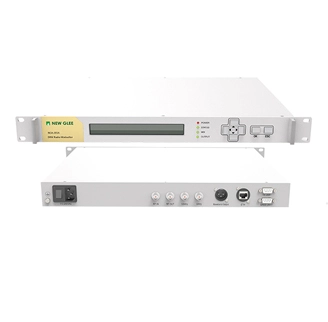
An FM transmitter is the core RF equipment in an FM broadcasting system. It receives processed audio signals, modulates them onto an FM carrier frequency, amplifies the signal, and sends it to the antenna system for broadcast coverage. The transmitter directly affects signal stability, audio performance, operating efficiency, and long-term maintenance requirements.
Power selection is one of the most important decisions, but it should not be treated as “higher is always better.” A 50W transmitter may be suitable for a small local broadcast, campus radio, or limited-area service. A 300W or 1000W transmitter may be more appropriate for a larger community or city-level coverage requirement. A 2000W system may be used where a stronger broadcast service is needed, depending on local regulation, frequency allocation, antenna height, terrain, and interference environment.
The real coverage area is influenced by several factors, including transmitter output power, antenna gain, antenna installation height, feeder loss, terrain, building density, and regulatory limits. For this reason, professional buyers should define the required service area first, then choose the transmitter power and antenna system accordingly.
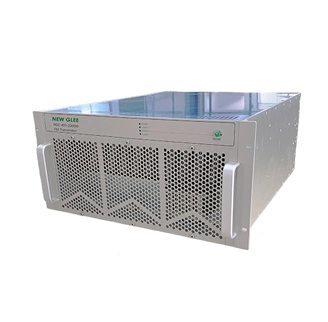
Newglee offers FM transmitter models covering 50W, 100W, 300W, 1000W, and 2000W power levels, giving buyers options for different broadcast scenarios. However, the final configuration should still be matched to the project’s coverage target and site conditions.
Different FM broadcasting projects require different transmitter power levels. The correct power range depends on whether the project is designed for local information service, public broadcasting, emergency communication, regional radio transmission, or system redundancy.
| Broadcast Scenario | Typical Buyer Need | Power Selection Consideration |
|---|---|---|
| Campus or community radio | Local audio coverage with limited service area | Lower-power transmitters may be enough when antenna height and site conditions are suitable |
| Local radio station | Stable coverage for a town, district, or small city area | Medium power may be needed, combined with proper antenna gain and feeder planning |
| Government or public service broadcasting | Reliable public communication and emergency information delivery | Stability, protection functions, monitoring, and backup design are important |
| Regional FM broadcasting | Wider coverage and stronger signal delivery | Higher power, antenna system design, and site planning should be evaluated together |
| Multi-frequency station | Several FM services sharing infrastructure | Transmitter planning should consider FM combiner configuration and isolation performance |
For small projects, buyers sometimes focus only on price and output power. This can lead to problems if the transmitter lacks stable cooling, protection functions, clean modulation performance, or suitable monitoring interfaces. For larger projects, the power level should be planned together with antenna height, radiation pattern, transmission line loss, combiner requirements, and licensing conditions.
Before buying an FM broadcast transmitter, buyers should review several technical factors beyond rated output power. These specifications directly affect operation, audio quality, maintenance, and long-term reliability.
Frequency Range & Adjustment: Ensure compatibility with your local FM band (typically 87.5–108 MHz). Software-controlled frequency adjustment offers flexibility for future changes.
Output Power Control: Adjustable power allows fine-tuning of coverage and energy consumption.
Amplifier Technology & Efficiency: Look for advanced LDMOS amplifiers with high efficiency, excellent heat dissipation, and modular design for easier maintenance.
Protection Functions: Essential protections include overcurrent, overvoltage, overheating, and VSWR (impedance mismatch) protection.
Monitoring & Control: Modern systems should offer LCD displays, remote monitoring, SNMP/Web control, and alarm notifications.
Signal Input Compatibility: Support for analog, digital (AES/EBU), IP audio, and external processors ensures seamless integration.
An FM transmitter is only one part of a broadcast transmission system. To achieve stable performance, the supporting equipment must be selected and matched correctly. A complete system usually includes the transmitter, antenna, feeder cable, combiner if needed, audio source or processor, monitoring equipment, grounding system, and sometimes backup power.
Antenna System: Type, height, gain, radiation pattern, and mechanical strength directly affect coverage.
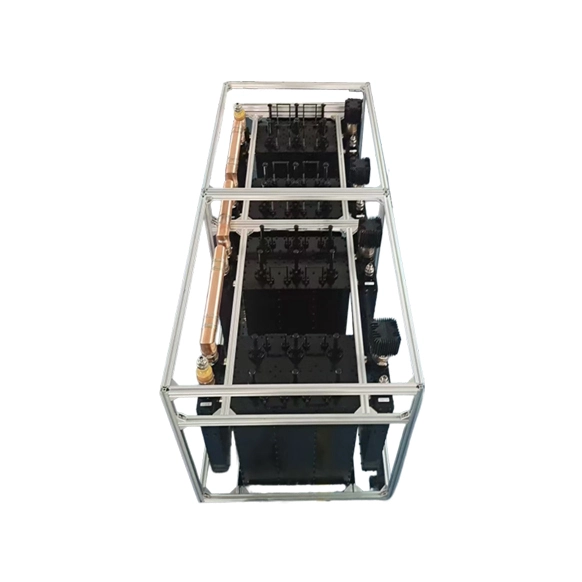
FM Combiner: Critical for multi-frequency sites to share one antenna with low loss and high isolation.
Feeder Cables & Accessories: High-quality cables, connectors, grounding, and lightning protection.
Audio Processors & Monitoring Equipment: For clean sound and reliable operation.
Newglee provides not only high-performance FM transmitters but also matching FM combiners and full system solutions designed for real-world broadcasting demands.
A suitable FM transmitter should be selected according to the full broadcasting environment, not only by rated output power. Buyers should consider frequency planning, target coverage, antenna height, terrain, transmitter efficiency, protection functions, monitoring needs, and future expansion.
For small local stations, a lower-power transmitter with the right antenna system may provide efficient and stable service. For public broadcasting, government radio, emergency communication, or regional coverage, higher power and stronger system integration may be required. For multi-frequency sites, combiner design, isolation, antenna sharing, and maintenance access become important parts of the decision.
If you are planning an FM broadcasting project, share your frequency plan, target coverage area, existing site conditions, antenna requirements, and expected power level with Newglee. The engineering team can help evaluate a suitable FM transmitter, antenna, combiner, and full fm equipment solution designed specifically for your project.
A: A low-power FM transmitter typically refers to an FM broadcast transmitter with output power ranging from 1W to 300W. It is commonly used for community radio, campus stations, drive-in events, church broadcasting, and small-scale local coverage.
A: A high-power FM transmitter generally refers to models with output power above 300W, often ranging from 500W to several kilowatts (1kW, 2kW, 5kW+). These are designed for larger coverage areas such as regional radio stations, city-wide broadcasting, and professional FM networks.
A: Low-power FM transmitters offer several key advantages:
Lower equipment and installation costs
Easier licensing and regulatory approval in many regions
Simpler installation and smaller footprint
Lower electricity consumption and operating costs
Ideal for localized coverage with less interference to other stations
They are perfect for community, campus, and niche broadcasting projects where wide-area coverage is not required.
.
