



Phone:
+86-15928560945
As more radio stations transition to digital-hybrid operations or expand their reach, selecting the right FM transmitter has become one of the most critical decisions for broadcast engineers and station owners. A well-chosen transmitter directly impacts coverage, audio quality, reliability, and long-term operating costs.
Whether you are building a new station, upgrading an existing facility, or planning a community or campus network, this article covers the essential factors to consider when evaluating professional FM broadcast transmitter solutions.
An FM transmitter works by taking an audio signal and modulating it onto a radio frequency carrier wave using Frequency Modulation (FM). The signal is then amplified to the desired power level and transmitted through an antenna. Higher power increases signal strength, allowing greater coverage distance and better penetration through obstacles such as buildings and terrain. However, higher power also means greater electricity consumption, stricter regulatory requirements, and potentially higher equipment costs. Selecting the appropriate power level ensures optimal coverage while maintaining efficiency and compliance.
| Application | Recommended Power | Key Features Needed |
|---|---|---|
| Community / Campus Radio | 50W–300W | Compact, easy installation, RDS |
| Town / Regional Station | 300W–1kW | High reliability, combiner ready |
| City-Wide Broadcasting | 1kW+ | Advanced cooling, remote monitoring |
| Multi-Channel Network | Modular + Combiner | Low-loss combining, high isolation |
Modern listeners expect near-CD quality sound. Look for transmitters with:
Wide frequency response (50Hz–15kHz)
Low distortion and excellent signal-to-noise ratio
Built-in or compatible audio processing (RDS, stereo encoder, dynamic processing)
Advanced models also support digital inputs (AES/EBU, IP audio) for hybrid analog-digital workflows.
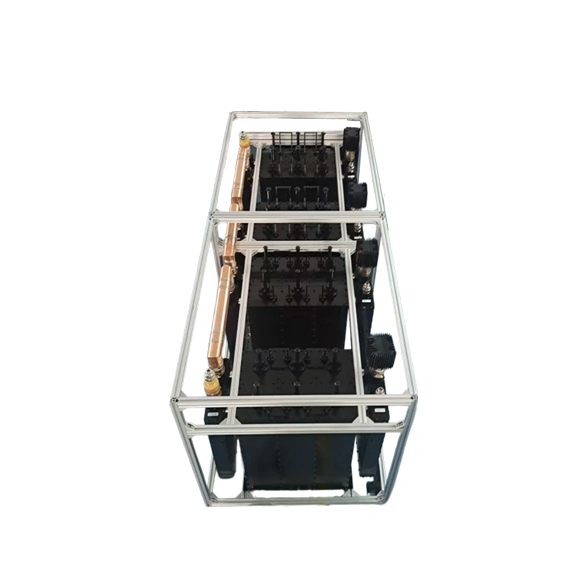
If you plan to broadcast multiple channels or expand in the future, FM combiner compatibility is crucial. A high-quality combiner allows multiple transmitters to share a single antenna while maintaining excellent isolation and minimal insertion loss.
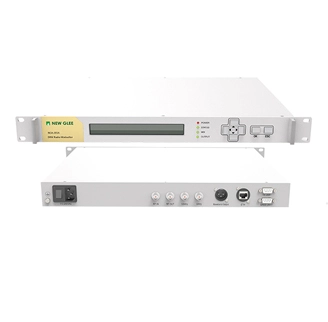
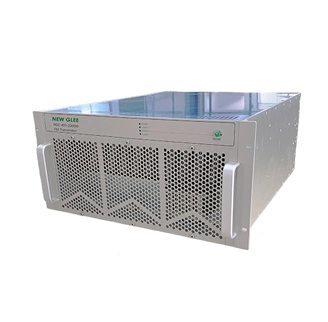
As one of the professional fm broadcast transmitter manufacturers, Newglee offers modular FM transmitters that integrate seamlessly with professional combiners, supporting efficient multi-channel operation with low power loss and high reliability.
Professional broadcast stations require 24/7 operation. Prioritize transmitters with:
Efficient cooling systems (air or liquid)
Robust power amplifiers (e.g., LDMOS technology)
Redundant power supplies and comprehensive protection circuits
Remote monitoring and SNMP/web-based control
Ensure the transmitter meets your country’s technical standards (FCC, ETSI, or local equivalents). Key considerations include:
Frequency stability
Spurious emission limits
Harmonic suppression
Licensing requirements
Working with experienced manufacturers helps avoid compliance issues during installation.
Choose a modular system that allows easy power upgrades or additional channel integration. This protects your investment as your station grows.
Partnering with reputable fm broadcast transmitter manufacturers makes a significant difference. Look for companies that provide:
Full system design consultation
Factory testing and customization
Local technical support and spare parts availability
Clear warranty terms
Newglee stands out as a professional manufacturer offering a complete range of FM transmitters (from 50W to 1kW and beyond) and complementary solutions including high-performance FM transmitter combiner. Ready to upgrade your broadcast station? Contact the Newglee team today and get a custom FM transmitter solution.
A: Extremely important for multi-frequency stations. It allows multiple transmitters to share one antenna, significantly reducing infrastructure costs while preserving signal quality.
A: Yes. Quality modular designs allow power upgrades without replacing the entire system.
A: Antenna system, audio processor, cables, combiner (if needed), and proper installation. A complete system approach delivers the best performance.
A: With proper maintenance, 8–15 years or more.


