



Phone:
+86-15928560945
With the increasing interest in renewable energy sources, the shift towards solar power has become significant both for residential and industrial applications. Industrial solar panels and residential solar panels, although similar in purpose, differ in several key aspects. Their contrasting properties impact their respective efficiencies, costs, and installation requirements. This article highlights the importance of understanding these differences to make informed decisions, whether you are considering investing in bulk solar panels for a large project or evaluating the potential benefits of a solar panel kit for home. Our discussion delves into the size, power output, cost analysis, durability, installation requirements, and efficiency across various environments to provide a comprehensive overview.
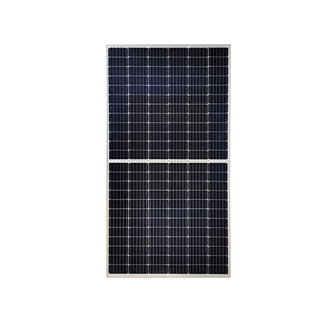
Solar panel kits for house significantly differ in size and power output when compared to industrial solar panels. The size of a solar panel plays a crucial role in determining its efficiency and installation feasibility. Residential panels are designed to fit smaller areas, often installed on rooftops, making them compact and user-friendly. In contrast, industrial panels are larger, catering to expansive areas to maximize energy capture, essential for supporting heavy power consumption.
| Type | Average Size | Power Output |
|---|---|---|
| Residential | 60-72 cells | 200-365 Watts |
| Industrial | 72-144 cells | 365-500 Watts |
This clear variation in power output also dictates their applications. For residential use, the efficiency of high power solar panels aims at meeting moderate energy needs efficiently, while industrial applications target large-scale operations requiring robust power solutions. Understanding these differences is imperative for efficiently tailoring an energy solution that meets specific needs.
Cost is a significant determinant when choosing between industrial and residential solar panels. The initial investment, maintenance, and lifespan values all factor into the overall cost assessment. Generally, solar panel kit with battery solutions for homes are designed for affordability, paving the way for more widespread adoption amongst homeowners.
| Type | Initial Cost | Maintenance Costs | Lifespan |
|---|---|---|---|
| Residential | $3,000 - $10,000 | Low | 25-30 years |
| Industrial | $10,000 - $50,000+ | Moderate | 30+ years |
The high costs associated with industrial panels reflect not only their higher output but also their efficiency and durability under demanding conditions. For commercial applications, the break-even period can be shorter, depending on the scale of energy generation and savings on energy costs, thus justifying the initial expense better compared to a solar energy system diagram for a household.
Durability and longevity are crucial factors in the lifecycle of solar panels. The ruggedness of industrial solar panels is designed to withstand extreme environmental conditions. High-quality materials ensure higher resilience against wear and tear, affirmed by a lifespan that often exceeds 30 years. For residential panels, while longevity may suggest lower resilience, they are built to manage common household environmental stressors effectively, ensuring sustainability for the typical household energy demand.
The construction materials used define the durability. While both types rely on solar panel schematic advancements and innovative materials, the engineering of industrial panels includes additional layers of protection aimed at minimizing degradation over time, ensuring consistent performance as detailed in the solar panel diagram strategies.
Installation requirements for solar panels differ significantly between residential and industrial applications. Residential setups are typically simpler, installed directly on rooftops, whereas industrial projects may involve dedicated solar farms where space is abundant for scalability. The installation complexity for industrial panels often necessitates hiring expert installers capable of designing a layout that efficiently manages energy capture and distribution.
Off grid solar power solutions demonstrate this well, where installation considerations also involve off grid inverters to optimize energy usage without traditional energy grid reliance. Understanding these requirements is critical for both cost considerations and ensuring the energy system efficiently meets consumption demands.
Environmental conditions significantly influence the efficiency of solar panels. Industrial panels often benefit from lower levels of geographical constraint, as their placement optimizes sun exposure most efficiently, crucial for operations like drm radio stations dependent on continuous, reliable power.
Residential solar panels, however, face limitations based on household location, inclines, and shadows from surrounding structures. To mitigate these factors, technological advancements in solar inverter manufacturers enhance adaptability, ensuring even smaller setups can harness adequate power under varied conditions.
Local weather patterns and climate conditions also steer decision-making. Thus, understanding geographic implications on efficiency is fundamental in planning sustainable, efficient energy systems.
The choice between industrial and residential solar panels requires a comprehensive evaluation of many factors including size, cost, durability, and environmental efficiencies. For entities dealing with large-scale energy needs, such as those in the am transmitter or digital radio mondiale industries, industrial solar solutions offer the robust power necessary to sustain operations efficiently. In contrast, residential solutions focus on balancing cost, space, and efficient power generation fitting smaller-scale needs.
Recognizing the intricate differences between these solar panel types enables consumers and businesses alike to opt for solar solutions that align with their specific energy consumption and operational requirements, thereby enhancing solar adoption and championing sustainable energy practices globally.
References:
